
11 Italian Kitchen Color Palettes That Bring Tuscany Home
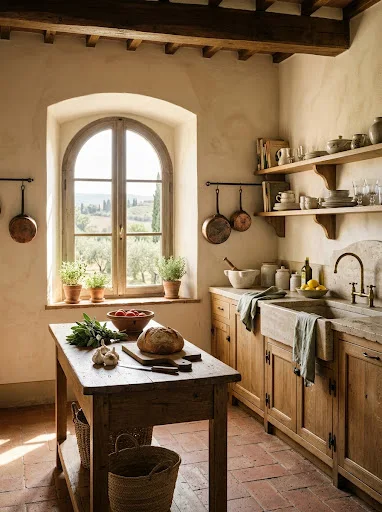
An Italian kitchen color palette is warm, layered, and connected to the landscape. Instead of relying on one dramatic shade, Tuscan rooms combine sun-washed neutrals, earth pigments, aged wood, and small notes of green or blue.
- 1. Terracotta, cream, and olive
- 2. Warm white and natural oak
- 3. Saffron and deep walnut
- 4. Sage, limestone, and linen
- 5. Rust, ivory, and charcoal
- 6. Dusty blue and warm beige
- 7. Brick red and pale plaster
- 8. Olive, copper, and cream
- 9. Ochre and dark green
- 10. Stone gray and aged wood
- 11. Burgundy and parchment
- How to choose the right Italian kitchen palette
- Final thought
1. Terracotta, cream, and olive
This classic combination feels instantly welcoming. Use cream on the walls, terracotta underfoot, and olive on a pantry door or textiles.
2. Warm white and natural oak
For a lighter interpretation, pair chalky white plaster with honey-toned oak. Add handmade pottery to keep the scheme from feeling too minimal.
3. Saffron and deep walnut
A muted saffron wall gives the kitchen a golden glow, while walnut cabinetry adds depth. Balance both with pale stone countertops.
4. Sage, limestone, and linen
Soft sage works beautifully with creamy limestone and flax-colored fabric. This restrained palette suits both traditional and modern Italian kitchens.
5. Rust, ivory, and charcoal
Rust brings energy without the brightness of true orange. Use charcoal in small doses on hardware, lighting, or a range hood.
6. Dusty blue and warm beige
Inspired by faded shutters and coastal villages, dusty blue gives an Italian kitchen a gentle freshness. Warm beige keeps it grounded.
7. Brick red and pale plaster
A brick-red island or tiled backsplash becomes a strong focal point against softly imperfect plaster walls.
8. Olive, copper, and cream
Olive cabinetry feels organic beside copper pans and creamy counters. Let the metal develop a natural patina for an authentic, collected look.
9. Ochre and dark green
Ochre walls and deep green accents evoke an Italian garden at sunset. Keep ceilings and large surfaces light to preserve openness.
10. Stone gray and aged wood
A warm stone gray creates a calm foundation for antique oak, chestnut, and woven textures. Avoid cool blue-gray shades.
11. Burgundy and parchment
Use wine-inspired burgundy on a small island, banquette, or cabinet interior. Parchment walls soften the richness and make the color feel timeless.
How to choose the right Italian kitchen palette
Study the room's daylight first, then select one dominant neutral, one earth color, and one accent. Repeat each shade in at least two places. For more inspiration, visit our Italian kitchen design guide and this Mediterranean kitchen inspiration.
Final thought
The most convincing Italian kitchen color palettes look better with age. Choose softened pigments, honest materials, and finishes that become richer through everyday use.
Deja una respuesta