
Tuscan Living Rooms: Bring the Italian Countryside Into Your Home

From bland to breathtaking: How I gave my living room a rustic Italian soul
I used to think my living room was “good enough.” Neutral sofa, a few throw pillows, generic wall art. It was functional—but it didn’t feel like anything special. That changed the moment I stepped into an old villa in Tuscany during a trip that was meant to be about food and wine, but ended up inspiring my entire home.
The villa's living room had worn terracotta floors, a fireplace framed in stone, exposed wooden beams, and soft golden walls that looked like they’d absorbed the Italian sun. It felt like time slowed down there.
When I got back, I couldn’t forget that space. So I decided to recreate it—not by copying, but by capturing its essence. That’s how my journey into Tuscan living room design began.
And now? I’m going to show you exactly how to bring that same warmth, texture, and timelessness into your own home.
What Makes a Tuscan Living Room Unique?
Tuscan living rooms are deeply rooted in history, nature, and a relaxed sense of elegance. They’re inspired by the villas and farmhouses of Italy’s countryside—where comfort, age, and craftsmanship are more important than trends.
Core elements of Tuscan living rooms:
- Warm, earthy color palettes (terracotta, ochre, olive, beige)
- Natural materials (wood, stone, wrought iron, linen)
- A mix of textures: rough walls, smooth ceramics, soft throws
- Rustic, vintage furniture with aged finishes
- Arches, beams, and artisanal details
- Low, warm lighting that creates a lived-in glow
This isn’t just interior design—it’s an atmosphere. Tuscan spaces are meant to be felt, not just seen.
How to Design a Tuscan Living Room Step by Step
Here’s how you can take your space from ordinary to authentic Tuscan.
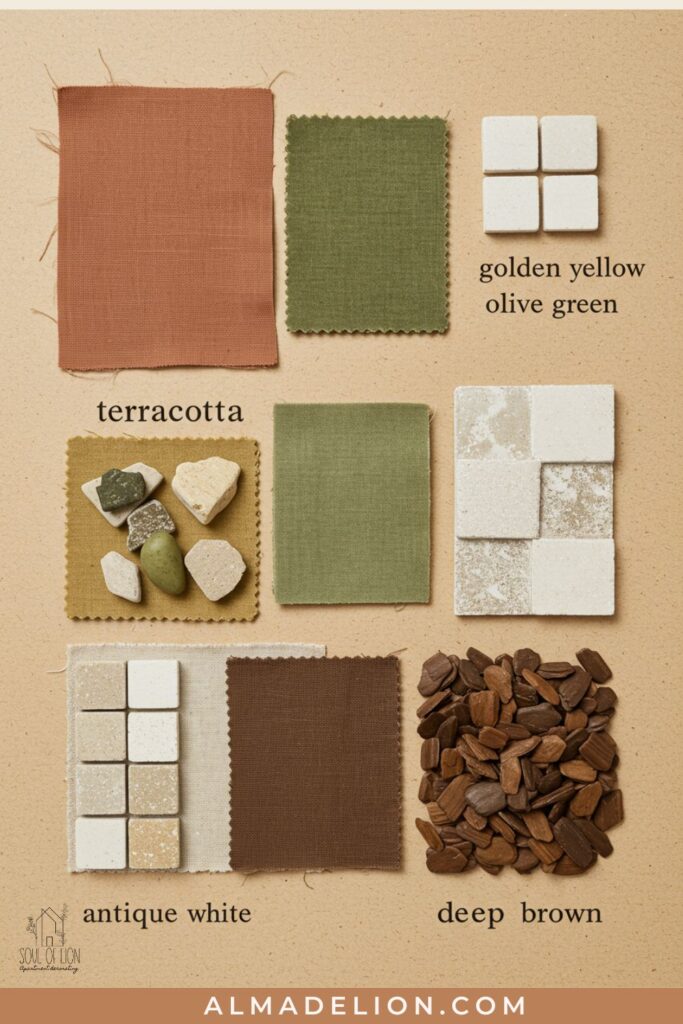
1. Choose a Tuscan Color Palette
Start with the soul of your room—the colors.
Tuscan-inspired shades include:
- Terracotta
- Golden yellow
- Olive green
- Burnt sienna
- Cream and antique white
- Deep browns and bronze accents
Paint one or more walls in a warm shade, or use these colors through textiles and decor. Stay away from cool or overly modern tones.
Visual tip: Pair a textured plaster wall in ochre with warm wooden floors and neutral furnishings for a balanced look.
2. Focus on Natural Materials
A Tuscan living room feels organic—like everything came from nature.
Incorporate materials like:
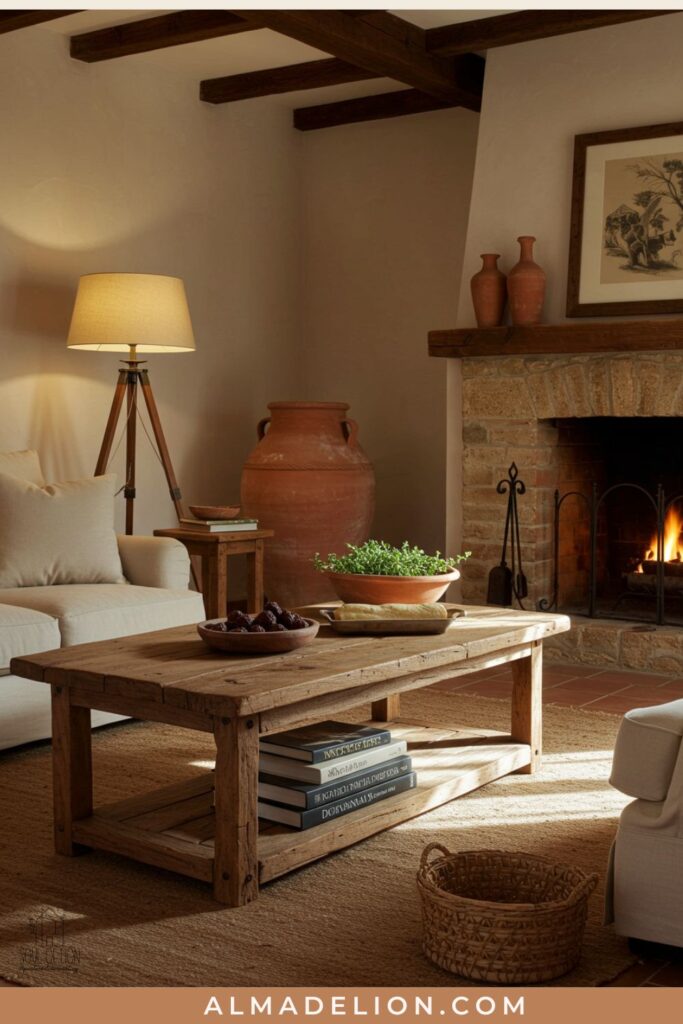
- Wood: reclaimed beams, rustic coffee tables, aged sideboards
- Stone: fireplaces, tile floors, or stone-look walls
- Wrought iron: curtain rods, light fixtures, decorative accents
- Linen and cotton: throw pillows, curtains, slipcovers
Avoid anything plastic, synthetic, or glossy. Texture and imperfections are what make it feel real.
3. Invest in Rustic, Comfortable Furniture
Tuscan furniture should look like it’s been there forever—and be sturdy enough to last a lifetime.
Furniture ideas:
- A large, deep sofa in linen or textured cotton
- Oversized armchairs with slipcovers or distressed leather
- A wood coffee table with visible grain or knots
- An antique console or bookshelf with arched detailing
- A vintage trunk used as storage or a side table
If it looks like it has a story, it belongs in a Tuscan space.

4. Add Old-World Architectural Details
Even if you’re working with a modern home, you can incorporate Tuscan structure and soul.
Simple ways to add architectural character:
- Install wood beams (real or faux) on the ceiling
- Create a faux stone or plaster fireplace mantle
- Use arches or rounded shapes in mirrors, shelving, or door frames
- Add a textured wall finish or faux stucco paint effect
- Incorporate stone or brick veneer on one accent wall
These elements transform a plain room into a space with timeless character.

5. Layer Warm, Ambient Lighting
Lighting is everything in a Tuscan living room. It’s not just about brightness—it’s about mood.
Tuscan lighting ideas:
- Wrought iron chandeliers or pendant lights
- Soft table lamps with beige or linen shades
- Wall sconces with warm bulbs
- Candles or lanterns in rustic holders
Stay away from bright, cool-toned lighting. The goal is to recreate the glow of a sunset over rolling Tuscan hills.

6. Decorate with Meaningful Accents
Tuscan rooms don’t need clutter—they need soulful touches that reflect craftsmanship and nature.
Accent decor to consider:
- Terracotta pots or bowls
- Vintage oil paintings or landscape art
- Iron candle holders or lanterns
- Ceramic jugs, pitchers, or tiles
- Olive branches or dried lavender in a vase
- Woven baskets for storage
- Stacks of old books on a wooden coffee table
Choose fewer, better things. The right accent can say more than a room full of random decor.

7. Don’t Forget the Floor
Tuscan living rooms are usually grounded in terracotta tiles, natural stone, or rustic wood.
If you can’t change your flooring, try layering:
- A jute or sisal rug
- A faded Persian-style rug in warm tones
- A woven wool rug in earth colors
Rugs add depth, softness, and color while nodding to the Tuscan tradition.
Where to Find Tuscan-Inspired Furniture and Decor
Without making it sound like a shopping list, you can integrate subtle monetization by linking to:
- Reclaimed wood coffee tables
- Mediterranean wall art
- Ceramic pottery from artisan brands
- Faux stone wall panels or paint kits
- Lighting with iron or bronze finishes
- Linen slipcovered sofas
- Woven or jute rugs
Use affiliate links, product suggestions, or design inspiration links to drive monetization without being too salesy.
Final Thoughts: The Living Room You’ll Never Want to Leave
Designing a Tuscan living room is about more than copying a look—it’s about creating a space that welcomes, warms, and grounds you. It’s a style that’s full of life, history, and texture.
Whether you live in a downtown loft or a countryside home, you can bring Tuscany into your life—one warm tone, rustic material, and thoughtful detail at a time.
What’s the first thing you’d add to your own Tuscan living room?
Leave a comment and let’s inspire each other.

Deja una respuesta